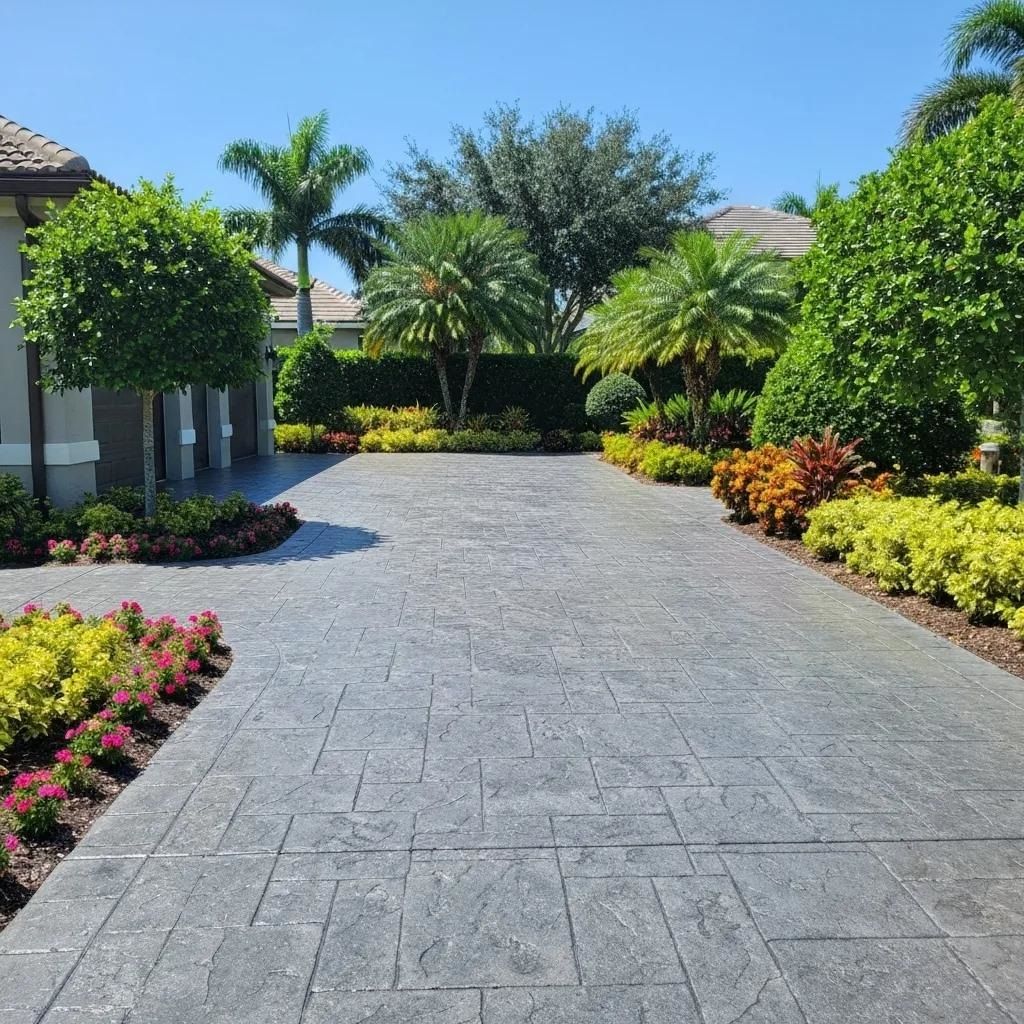
Concrete Foundations In Florida: Installation, Repair, and Solutions for Durable Residential and Commercial Structures
Concrete Foundations In Florida: Installation, Repair, and Solutions for Durable Residential and Commercial Structures
Concrete foundations are the primary structural link between a building and Florida’s complex ground conditions, safely transferring loads to soil or engineered supports while resisting moisture and lateral forces. This guide explains foundation types, climate-driven risks, installation and repair methods, cost expectations, and applicable code and compliance considerations to help property owners and contractors make informed decisions. Florida’s high water table, sandy soils, hurricane exposure, and sinkhole-prone areas require specific mitigation strategies—we'll examine those mechanics and practical solutions. Readers will learn how monolithic slabs, stem walls, pier systems, and slab-on-grade foundations perform in Florida, when to choose deep foundations or grouting, how concrete lifting restores level slabs, and what to expect in pricing and permitting. We also outline service steps and quality controls used by local contractors, and guide property owners in Wellington, FL toward requesting site assessments or project quotes where appropriate. Throughout, targeted keywords like concrete foundations in Florida, foundation repair, slab-on-grade Florida, and Wellington FL concrete foundation are integrated to improve relevance and clarity.
What Are the Best Types of Concrete Foundations for Florida Homes and Businesses?
Concrete foundation selection in Florida depends on soil bearing capacity, water table depth, flood exposure, and building loads; the right system balances structural performance, moisture control, and cost-effectiveness. In practice, foundation choice depends on site investigation—soil borings and geotechnical recommendations inform whether a near-surface slab or deeper pier/pile system is necessary. This section outlines the common foundation types used in Florida and compares their merits for residential and commercial projects. Understanding these options helps you prioritize durability and mitigation against common Florida hazards. The following ordered list gives a quick featured-snippet style overview of recommended foundation systems.
- Monolithic Slab Foundations: A single, poured slab with integrated footings that speeds installation and reduces joints, making it cost-efficient for many Florida homes.
- Stem Wall Foundations: Elevated systems with continuous footings and perimeter stem walls that provide crawlspace clearance and improved flood resilience.
- Pier Foundations: Deep supports (piles/piers) that transfer loads below weak or sinkhole-prone soils to competent strata, ideal for unstable sites.
- Slab-on-Grade Foundations: Thickened-edge slabs placed at grade that balance cost and durability for flat, well-drained lots with moderate loads.
These types form a practical menu for matching foundation design to local soil and climate risks; the next table compares foundation types by soil suitability and typical uses.
| Foundation Type | Best Soil Conditions | Key Advantages | Typical Uses |
|---|---|---|---|
| Monolithic slab | Moderate-bearing sandy soils with good drainage | Fast pour, integrated footings, cost-effective | Single-family homes, small commercial buildings |
| Stem wall | Sites needing elevation or crawlspace; moderate drainage | Improved flood resistance, easier access to utilities | Flood-prone lots, raised residential designs |
| Pier/pile | Weak, highly compressible, or sinkhole-prone soils | Transfers loads to deeper competent layers, minimizes settlement | Coastal, marshy, or karst-susceptible sites |
| Slab-on-grade | Stable, compacted soils with low water table | Simple design, durable surface, economical | Garages, warehouses, low-rise buildings |
This comparison highlights how site conditions direct foundation selection and why geotechnical input is essential before specifying a foundation type. After outlining the best types, it helps to examine each option in greater technical detail.
What Is a Monolithic Slab Foundation and Why Is It Popular in Florida?
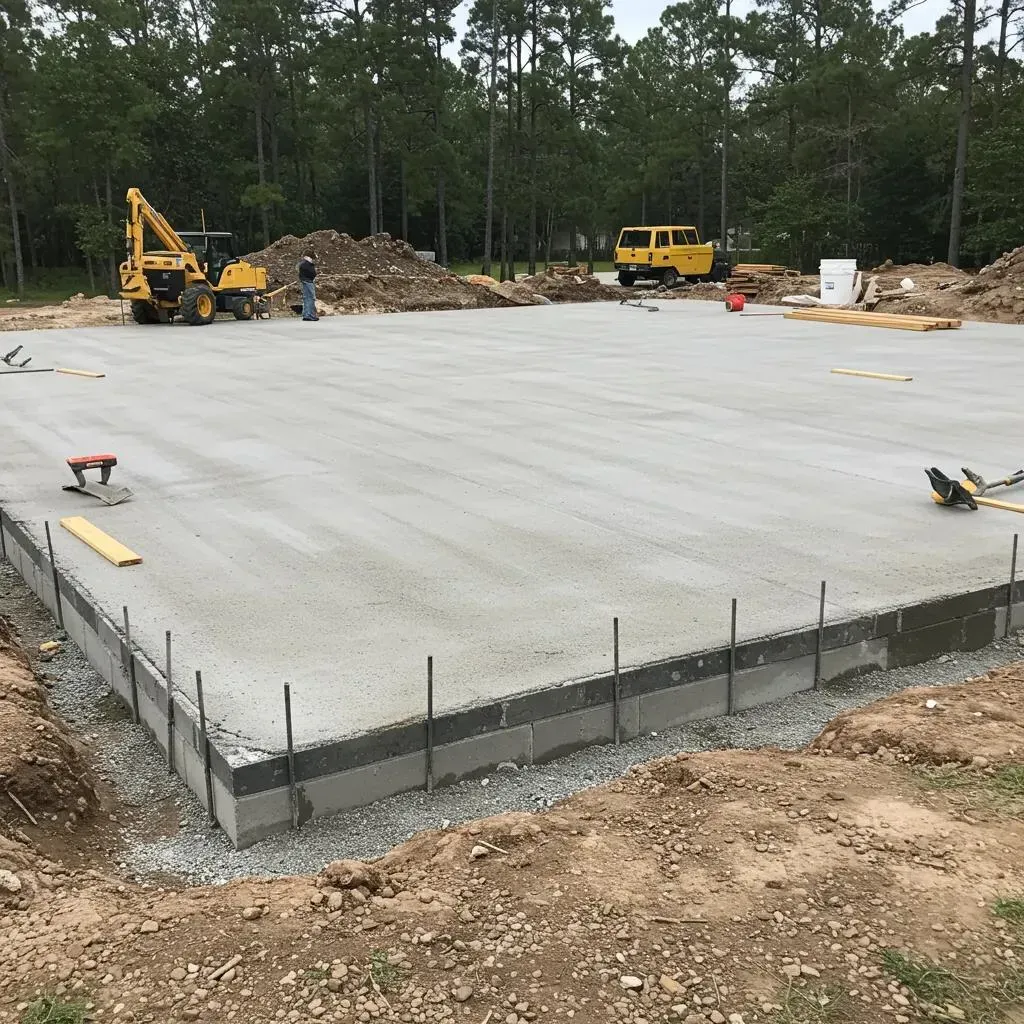
A monolithic slab foundation is poured as a single continuous concrete element, combining slab and footing in one operation to provide a unified load path and fewer cold joints. The construction sequence typically includes site grading, compacted fill, a vapor barrier, edge formwork with thickened footings, rebar or welded wire reinforcement, and a single pour with controlled curing. In Florida, monolithic slabs are popular because they reduce excavation time, lower labor costs, and limit exposed subgrade that can wick moisture, while also offering good performance on well-prepared sandy soils. Designers must still address moisture intrusion and expansion joints, and we install perimeter drainage or sump systems where water tables or surface runoff are a concern. Understanding these details clarifies when a monolithic approach provides the best balance of speed, cost, and durability.
How Do Stem Wall Foundations Work for Florida’s Soil Conditions?
Stem wall foundations consist of continuous perimeter footings with vertical stem walls supporting the superstructure above a slab or crawlspace, especially useful where elevation or ventilation beneath a building is desirable. Footings are sized to spread loads into near-surface soils while stem walls resist lateral loads and provide a damp-proof barrier above grade; reinforcing steel connects footings to stem walls for continuous load transfer. In Florida, stem walls allow finished floors to sit above minor flood elevations and make it easier to route utilities without penetrating the slab, improving long-term moisture control and maintenance access. Design must consider footing depth relative to seasonal moisture changes and possible scour or erosion, and should include proper perimeter grading and drainage to preserve bearing capacity. These attributes make stem walls a versatile option for moderate-risk sites requiring elevation.
When Are Pier Foundations Recommended for Florida Properties?
Pier or pile foundations use discrete vertical elements—driven, drilled, or helical—that bypass weak near-surface soils to support loads on deeper, competent strata, making them ideal for sites with low bearing capacity or sinkhole risk. The load path from structure to pier and into a pile cap concentrates stresses into reliable strata, reducing differential settlement and offering resilience where conventional footings would fail. In Florida, piers are recommended on saturated sands, organic fills, or karst-prone land where geotechnical exploration finds competent strata at depth or where uplift and lateral forces from hurricanes necessitate deeper anchorage. Installation choice (driven vs drilled vs helical) depends on access, vibration sensitivity, and subsurface conditions, while design coordination with structural and geotechnical engineers ensures appropriate capacity and corrosion protection. Pier systems typically cost more than shallow foundations but provide essential safety on marginal sites.
What Are the Advantages of Slab-on-Grade Foundations in Florida?
A slab-on-grade places a concrete slab directly on compacted subgrade, sometimes with thickened edges to act as footings, offering a streamlined, economical foundation for many residential and light commercial buildings. When properly engineered, slab-on-grade controls moisture with vapor barriers and perimeter drainage, and achieves thermal mass benefits that moderate indoor temperatures in Florida’s climate. Reinforcement with rebar or welded wire prevents shrinkage cracks, while integral control joints and proper curing reduce long-term cracking; subgrade preparation—compaction and geotextile separators—is critical for performance in sandy soils. Slab-on-grade is cost-effective for flat sites with good drainage and low flood exposure, but designers must consider vapor control, termite barriers where applicable, and the potential need for localized stiffening where heavy equipment or concentrated loads exist. For many projects, slab-on-grade offers the best balance of cost and durability when paired with thoughtful moisture mitigation.
How Does Florida’s Climate Affect Concrete Foundation Durability and Stability?
Florida’s climate imposes distinct hazards—high water tables, sandy or organics-rich soils, hurricanes, and karst geology—that accelerate moisture-related deterioration, settlement, and structural stress on foundations. Each hazard interacts with foundation design choices: high water tables reduce effective bearing capacity and increase hydrodynamic pressures, sandy soils can compact or erode, hurricanes apply wind uplift and lateral loads, and sinkholes can create abrupt bearing loss. Mitigation strategies focus on improving subgrade performance, controlling water at and below grade, and selecting foundation systems that either spread loads broadly or bypass problematic layers. This section summarizes the principal climate risks and practical engineering countermeasures that preserve foundation durability in Florida sites. The following lists and explanations provide actionable mitigation approaches.
- High water table & surface flooding: Install perimeter drainage, sump systems, and vapor barriers; consider raised stem walls or piles.
- Sandy soils & low cohesion: Use compaction, geotextiles, and engineered fill; specify deeper foundations where bearing is insufficient.
- Hurricanes & wind uplift: Provide continuous load paths, reinforced grade beams, and proper connection details to resist uplift and lateral forces.
- Sinkholes & karst: Conduct geotechnical investigations, use compaction grouting or deep foundations, and involve geotechnical engineers early.
What Are the Risks of High Water Tables and Sandy Soils on Foundations?
High water tables reduce the effective stress in near-surface soils, lowering bearing capacity and increasing the likelihood of settlement or heave under changing moisture conditions, which can manifest as cracks or differential movement in foundations. Sandy soils, common across Florida, are prone to changes in density if not properly compacted and can erode or settle under fluctuating groundwater, especially where surface drainage concentrates flow. Key preventive measures include pre-construction compaction, geotextile separation layers, controlled fill, and installation of sub-slab vapor barriers and perimeter drainage to lower hydrostatic pressure. Regular site grading and maintaining positive drainage away from the foundation are essential long-term controls to prevent saturation and loss of bearing. Properly implemented soil preparation not only stabilizes the foundation but also reduces future repair costs and service interruptions.
How Do Sinkholes Threaten Concrete Foundations in Florida?
Sinkholes form when subsurface dissolution of soluble rock (typically limestone) creates voids that eventually collapse, producing sudden loss of support and potentially catastrophic foundation damage in susceptible areas. Early signs of sinkhole activity include new or widening cracks, doors and windows that stick, sudden localized settlement, and depressions or aligned fissures on the surface; these indicators should prompt immediate geotechnical evaluation. Remediation methods include compaction grouting to fill voids and densify surrounding soils, underpinning to transfer loads to deeper competent layers, or replacing affected soils under engineered supervision. The chosen method depends on geotechnical findings and the scale of instability. Because sinkhole risk implicates subsurface geology, coordination with licensed geotechnical engineers and local authorities is essential before and during remediation. Early detection and professional assessment are critical to selecting cost-effective and durable repairs.
What Hurricane-Resistant Foundation Designs Protect Florida Structures?
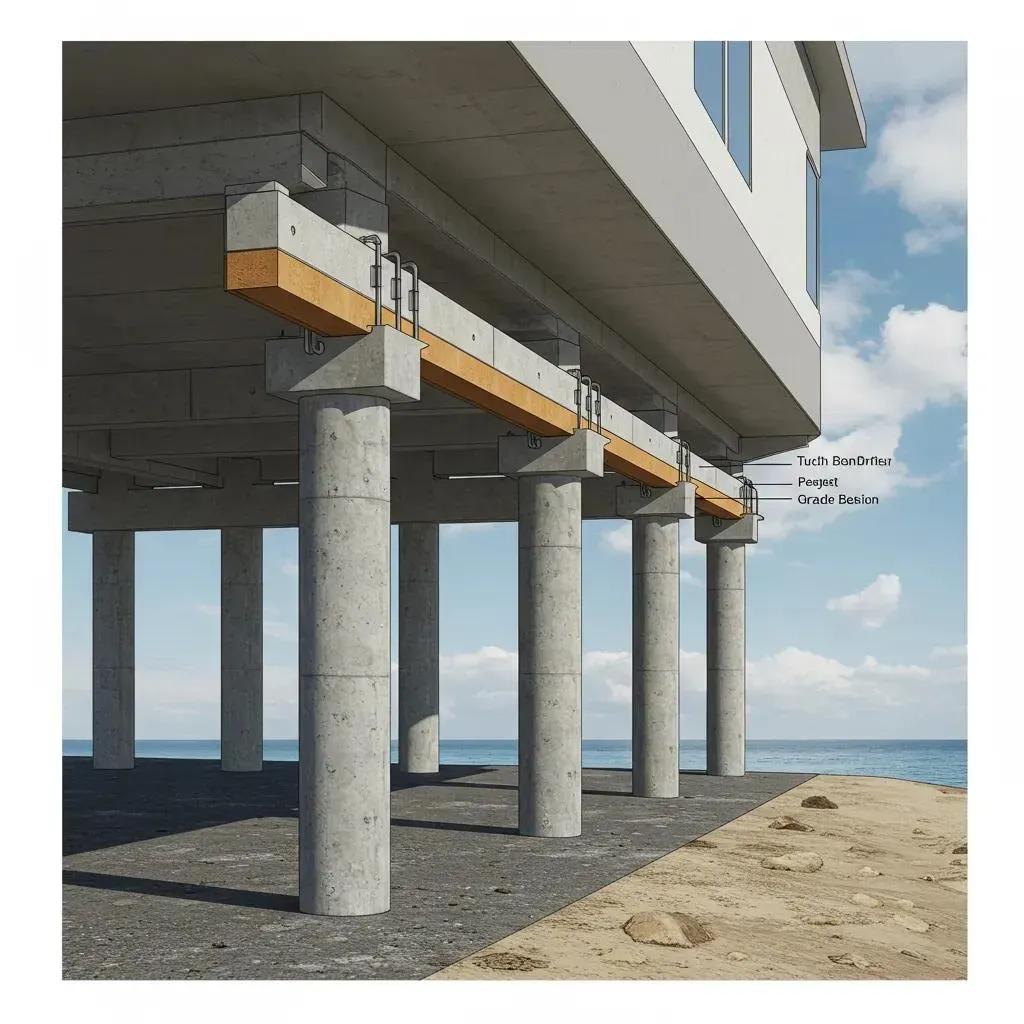
Hurricane-resistant foundation design emphasizes continuous load paths from roof and walls to the ground, uplift resistance, lateral stability, and corrosion-resistant materials to withstand Florida's salt-laden environments. Strategies include using deep pilings or piers for uplift and lateral capacity, reinforced grade beams to distribute loads, and robust connections between foundation elements and the superstructure to prevent separation during extreme winds. Material selection—such as specifying appropriate concrete cover for reinforcement, corrosion-resistant coatings for metal connectors, and adequate embedment depths—helps maintain long-term integrity in coastal and high-wind exposures. Design must align with current wind and flood loading requirements in the Florida Building Code and incorporate redundancy where possible to reduce failure risk. Implementing these features reduces wind-induced damage and preserves structural continuity during hurricane events.
Which Waterproofing and Drainage Solutions Are Essential for Florida Foundations?
Effective moisture control in Florida relies on a layered approach: site grading that directs surface water away from foundations, perimeter drainage systems (French drains), properly installed vapor barriers beneath slabs, and selective application of waterproofing membranes on vertical elements like stem walls. Sump pumps with backup power, positive landscape grading, and sealed penetrations reduce hydrostatic pressures and capillary rise that can otherwise undermine slabs and encourage mold in substructures. Perimeter gutters, downspout extensions, and regular maintenance of site drainage features prevent surface saturation that would change subgrade conditions over time. Routine inspection and upkeep of these systems maintain their effectiveness; combining these strategies with engineered subgrade preparation assures a comprehensive moisture management program for Florida foundations.
What Concrete Foundation Installation Services Does Sunmark Concrete Contractors Provide in Florida?
Sunmark Concrete Contractors specializes in residential, commercial, and industrial concrete foundation services in Florida, offering installation, lifting, and repair solutions tailored to regional conditions like high water tables and sandy soils. We provide full-service foundation installation options—including slab systems, stem walls, and pier installations—paired with quality-control practices such as reinforced placement, vapor barrier installation, and coordination with local inspection authorities. For property owners in Wellington, FL and nearby areas, we position our offerings to address local soil and climate challenges with reliable construction sequencing and drainage integration. If you are evaluating foundation work, contact us to request an assessment or project quote to determine the most appropriate foundation system for your site.
Sunmark’s service descriptions emphasize the following benefits to clients:
- Coordinated site preparation and geotechnical recommendations to match foundation type to soil conditions.
- Reinforced concrete placement, proper curing practices, and integration of drainage and vapor control systems.
- Options for commercial-grade deep foundations and pile systems where heavier loads or poor soils require them.
How Is a Concrete Foundation Installed for Residential Properties in Wellington, FL?
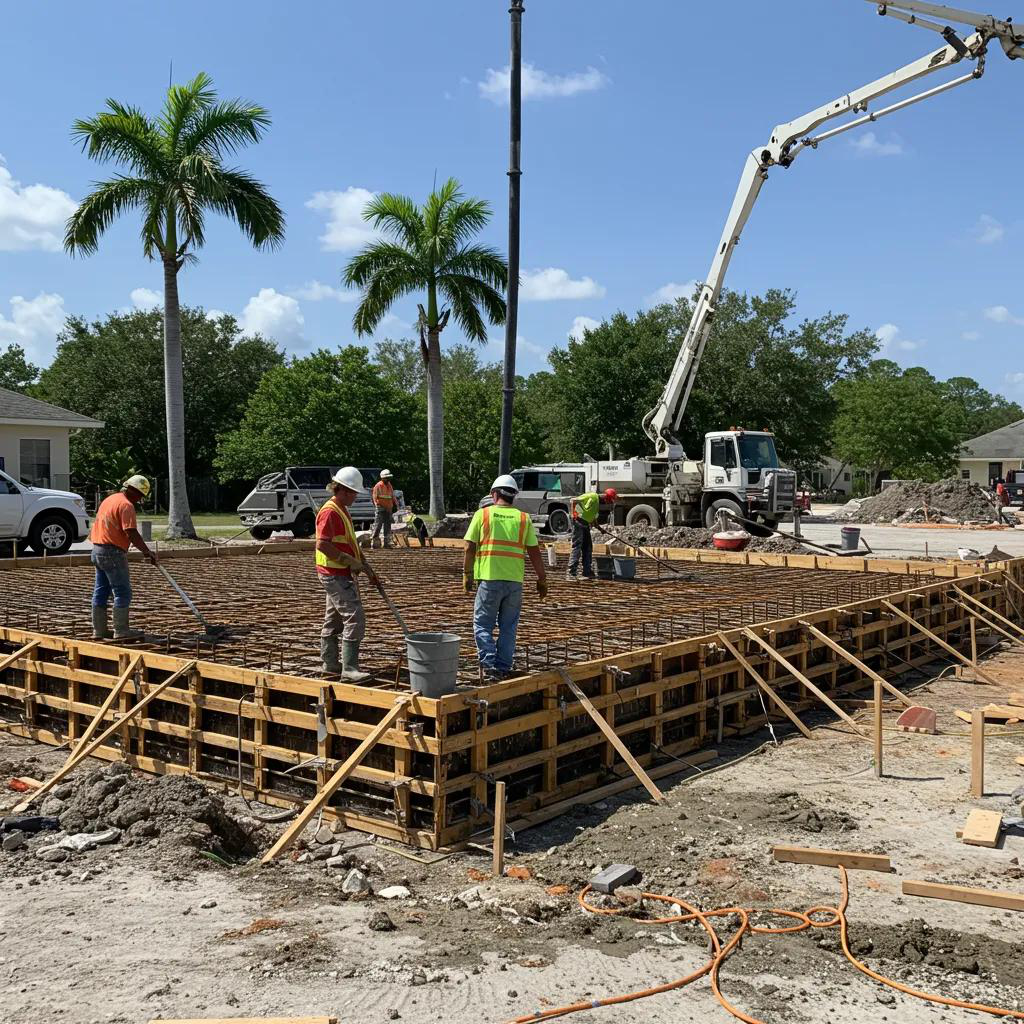
Residential foundation installation in Wellington begins with site assessment and soil testing to identify bearing capacity, water table, and any need for remediation. This foundational data informs the selected system and footing sizes. Site preparation follows with grading, compaction of subgrade, placement of geotextiles or engineered fill as required, and installation of vapor barriers and termite or moisture control elements where specified. Formwork, reinforcement detailing (rebar/welded wire), and placement of footings or pile caps are executed to provide continuous load paths, followed by slab pours or stem wall construction, finishing, and curing under controlled conditions to reach specified concrete strengths. Final steps include perimeter grading, drainage installation, and inspections to verify compliance with local codes; the process typically spans several weeks depending on complexity and weather. These coordinated steps ensure proper bearing and moisture protection tailored to Wellington’s soil and rainfall patterns.
What Are the Commercial Concrete Foundation Options Available in Florida?
Commercial foundations often demand heavier structural systems such as reinforced mats, pile-and-cap systems, grade beams, or combined footing arrangements to accommodate larger loads and service requirements. Reinforced concrete mats distribute loads across wide footprints and can be combined with ground improvement techniques where near-surface soils are marginal, while pile-and-cap systems transfer concentrated loads to deeper strata for buildings with heavy equipment or multi-story construction. Commercial projects require close coordination with structural engineers, more extensive testing (including pile load tests or mat deflection monitoring), and additional permitting and inspection steps compared to typical residential work. Our commercial offerings align with such requirements through engineered designs and by collaborating with consultants to meet code and performance objectives. Selecting the appropriate commercial system balances cost, schedule, and long-term serviceability based on site data and project program.
How Does Sunmark Ensure Longevity and Strength in Every Foundation Project?
Ensuring foundation longevity requires disciplined materials selection, reinforcement standards, curing regimes, and on-site quality checks that verify concrete consolidation and finishing meet engineered specifications. We emphasize standard quality-control steps such as verifying mix design compliance, ensuring correct rebar placement and cover, monitoring pour conditions and curing times, and coordinating with inspectors to document compliance with local code requirements. Preventative measures like incorporating vapor barriers, perimeter drainage, and proper site grading are integrated into projects to reduce future moisture-related deterioration and settlement risks. Working collaboratively with geotechnical and structural engineers ensures design intent is translated into construction practice, minimizing the likelihood of premature distress or costly remediation. These practical controls support durable foundations that meet performance expectations over the building’s service life.
How Can Concrete Foundation Repair and Lifting Solve Common Florida Foundation Problems?
Foundation repair in Florida addresses common issues such as cracking, settlement, and uneven slabs through targeted diagnostics and matching repair methods to the root cause; corrective options include crack injection, underpinning, compaction grouting, and concrete lifting. Effective repair begins with a thorough inspection and, when required, geotechnical evaluation to identify soil movement, water intrusion, or voids under the slab. Repair strategies focus on restoring structural capacity and re-establishing proper load paths while minimizing downtime—methods like polyurethane injection (polyjacking) lift and re-level slabs with minimal disturbance, whereas underpinning and compaction grouting address deeper support loss. The following table compares common repair methods, their typical suitability, and timeframes to guide decision-making.
Before the table, here is a concise list of repair goals to clarify expected outcomes.
- Restore level and load transfer to safe supporting strata.
- Seal and prevent moisture ingress that accelerates deterioration.
- Stabilize soils or voids beneath foundations to prevent recurrence.
| Repair Method | Problem Addressed | Typical Suitability | Typical Timeframe / Notes |
|---|---|---|---|
| Crack injection (epoxy/urethane) | Structural or non-structural cracks | Hairline to moderate cracks not caused by active sinkholes | 1–3 days; best for sealed remediation |
| Compaction grouting | Voids/loose sands under slab, small sinkhole remediation | Localized voids and near-surface loss of support | Several days to a week; requires monitoring |
| Underpinning | Deep settlement or loss of bearing | Severe settlement with need to transfer loads deeper | Several days to weeks; engineered solution |
| Polyurethane injection (polyjacking) | Uneven slabs and minor settlement | Fast lifts, minimal excavation, suitable for sidewalks, slabs | Hours to a day; rapid cure and return-to-service |
What Causes Cracked Concrete Foundations and How Are They Repaired?
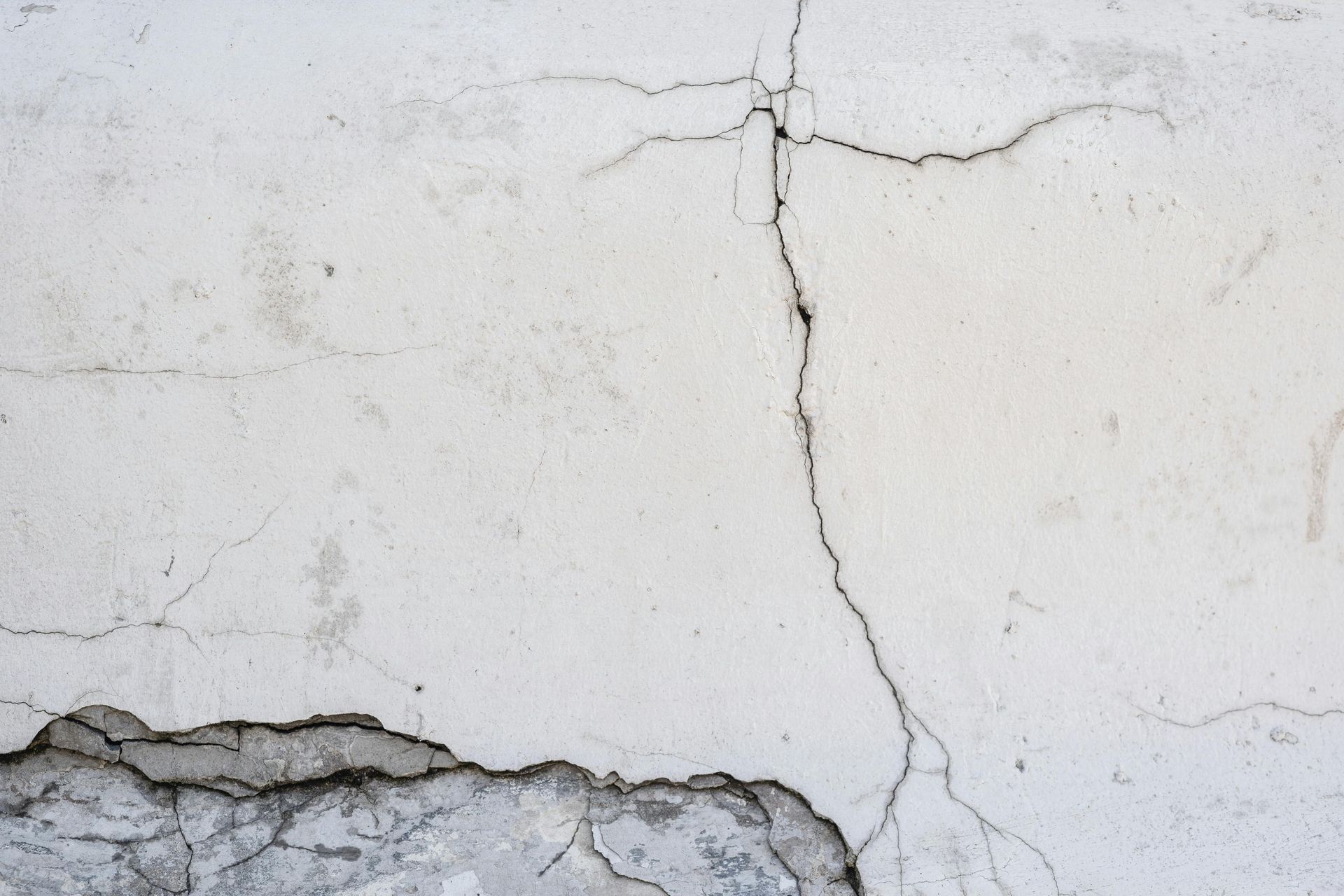
Cracked concrete foundations result from several mechanisms including shrinkage during curing, differential settlement, corrosion-induced reinforcement loss, hydrostatic pressure, and subsurface voids or sinkhole activity—diagnosis differentiates cosmetic hairline cracking from structural distress. Repair options range from epoxy injection for structural crack bonding to flexible urethane injections that seal active water leaks, while more severe cases may require partial replacement, underpinning, or drainage remediation to remove the causative factor. Our professionals perform crack mapping, instrumentation, and sometimes destructive testing to determine depth and connectivity of cracks before recommending interventions. When cracks indicate underlying soil movement, coupling repairs with soil stabilization or deep foundation work prevents recurrence and restores long-term serviceability. Accurate diagnosis ensures repairs are both efficient and durable.
How Does Concrete Lifting Address Foundation Settling and Uneven Slabs?
Concrete lifting methods restore level surfaces by injecting materials beneath slabs to fill voids and re-establish bearing; two common techniques are polyurethane injection (polyjacking) and mudjacking (cementitious slurry). Polyurethane expands and densifies subgrade materials with minimal intrusion and fast cure times, making it suitable for small to moderate lifts and for reducing water pathways beneath slabs; mudjacking uses heavier slurry suitable for larger void volumes but may be more invasive and slower to cure. In Florida soils, polyjacking often offers superior moisture resistance and a lighter method of expansion that works well in sandy subgrades, while larger structural elements may require engineered underpinning or compaction grouting. Typical benefits include rapid return to service, reduced demolition compared to replacement, and cost savings when the slab structure is otherwise sound. Selection depends on slab thickness, load demands, and soil conditions identified during inspection.
What Are the Costs and Timeframes for Foundation Repair in Florida?
Repair costs vary widely based on method, access, soil remediation needs, and severity; typical per-square-foot lifts or crack repairs can range substantially, while underpinning and deep stabilization are priced as engineered projects with higher total costs. Major cost drivers include the extent of excavation, need for geotechnical testing, volume of grout or injection material, temporary shoring, and required permits or inspections. Typical timeframes range from a single day for small localized lifts or crack injections to several days or weeks for compaction grouting and underpinning that require staged fills and monitoring. Estimating repair costs accurately requires on-site assessment and geotechnical input. We recommend budgeting for diagnostic fees plus contingency to account for unforeseen subsurface conditions. Comparing repair versus replacement depends on severity, with repairs often offering considerable savings when the structure is otherwise sound.
What Are the Typical Costs and Pricing Factors for Concrete Foundations in Florida?
Understanding foundation costs requires separating per-square-foot baselines from project-level drivers such as soil remediation, reinforcement, and permitting; per-square-foot figures are starting points, not guarantees. As an example baseline from industry sources, a typical 4-inch residential slab may be cited near a mid-range per-square-foot figure, but increasing slab thickness, reinforcement, soil corrections, drainage, or floodproofing can multiply total costs. Major cost drivers include site access and grading, required compaction or ground improvement, thickness and reinforcement specifications, incorporation of waterproofing or vapor barriers, and engineering and permit fees. The following table provides a condensed EAV-style overview to help owners anticipate ballpark ranges and the principal variables that influence final bids.
| Project Type | Typical Cost Range (2024-2025 estimates) | Major Cost Drivers | Typical Timeline |
|---|---|---|---|
| Residential slab (basic) | $6–$15 per sq ft | Slab thickness, reinforcement, site prep | 1–3 weeks |
| Stem wall / raised foundation | $12–$30 per sq ft (varies) | Footing size, elevation, crawlspace finishes | 2–6 weeks |
| Pier/pile foundations | Project-based; higher cost | Pile type, depth, load testing, rig access | Several weeks |
| Foundation repair (lifting/grouting) | $3–$25+ per sq ft / project basis | Method, access, volume of material, engineering | Hours to several weeks |
These ranges reflect how complexity and subsurface remediation substantially influence total cost; owners should request site-specific estimates. The next list clarifies the top cost drivers to watch during planning.
- Site preparation and soil remediation
- Reinforcement and concrete mix design
- Drainage and waterproofing requirements
- Engineering, permits, and testing
- Accessibility and equipment mobilization
How Much Does Concrete Foundation Installation Cost per Square Foot in Florida?
A common industry baseline for a simple 4-inch slab is often cited in mid-range per-square-foot figures, but actual pricing in Florida varies with thickness, reinforcement, soil remediation, and drainage requirements. Increasing slab thickness to support heavier loads, adding rebar or welded wire, specifying higher-strength mixes, or performing compaction and ground improvement all raise per-square-foot costs. Local permit fees, required inspections, and flood-elevation work can add discrete costs that are not captured in per-square-foot lines. Because of this variability, site-specific proposals—based on geotechnical data and structural design—provide the only reliable project estimate. We advise owners to view baseline per-square-foot figures as planning guidance rather than final pricing.
What Influences the Overall Cost of Residential and Commercial Foundations?
Overall costs are driven by subsurface conditions (requiring soil remediation or deep foundations), structural requirements (thicker slabs, heavy equipment loads), and regulatory needs (permits, engineered drawings, and testing). Accessibility for equipment mobilization and material staging affects labor productivity and can increase costs in tight urban or constrained rural sites. Weather delays—particularly in Florida’s rainy season—affect schedule and potential mobilization charges, while specialized elements such as corrosion-resistant reinforcement for coastal sites further increase material costs. Coordination with engineers and clear scope definition help control change orders and provide predictable budgets. Transparent bids that separate geotechnical, structural, and construction costs reduce surprises during execution.
How Do Repair and Maintenance Costs Compare to New Installation?
Repair and maintenance, when addressing localized issues like minor settlement or single cracks, are typically less expensive than full replacement, offering cost-effective extension of service life when the underlying structure is intact. However, extensive soil instability, widespread foundation failure, or recurring sinkhole activity may make replacement or deep stabilization the more economical long-term option despite higher upfront cost. Maintenance tasks—such as ensuring positive drainage, repairing grading, and maintaining waterproofing—are low-cost measures that often prevent larger repairs. When making decisions, you should weigh the remaining useful life, frequency of recurring problems, and comparative lifecycle costs to identify when repair is a stopgap versus when replacement is prudent.
What Florida Building Codes and Regulations Affect Concrete Foundation Construction?
Florida’s construction framework requires adherence to the Florida Building Code, which integrates structural, floodplain, and wind-load provisions relevant to foundation design and construction; local jurisdictions may impose additional requirements. Key code topics include minimum footing and foundation load criteria, reinforcement and concrete quality standards, flood elevation and freeboard requirements for coastal and floodplain areas, and wind-resistant connection details where uplift and lateral loads are significant. Permitting and inspection processes ensure that foundations are built to plan and specification, and engineering sign-offs are typically required when soils or loads exceed prescribed limits. Project teams must consult the current Florida Building Code editions and local amendments to ensure full compliance and avoid costly rework or failed inspections.
What Are the Key Residential Foundation Building Codes in Florida?
Residential foundation codes address footing dimensions, reinforcement, concrete strength classes, slab reinforcement, termite barriers where applicable, and minimum elevations in flood zones to mitigate water intrusion and storm surge risk. Designers must reference local flood maps to determine required elevations and incorporate tie-downs, continuous load paths, and proper anchorage to meet wind-load criteria. Permits generally require submitted foundation plans, engineered details for non-standard conditions, and scheduled inspections at key milestones such as footing placement, reinforcement inspection, and final slab or stem wall approval. Consulting the latest Florida Building Code and coordinating with local building departments early in design reduces delays and assures regulatory alignment.
How Do Commercial Foundation Regulations Different in Florida?
Commercial projects face stricter design criteria, higher load requirements, and often more rigorous documentation and inspection regimes than residential work; structural calculations and engineer-stamped drawings are standard. Commercial foundations may require specialized testing such as pile load tests, thicker mats with detailed reinforcement schedules, and additional considerations for services, utility penetrations, and fire-resistance where applicable. Approvals may involve multiple agencies, including zoning, environmental, and permitting authorities, and may impose project-specific conditions for stormwater management or site remediation. Engaging licensed structural and geotechnical engineers and integrating their reports into permit submissions streamlines commercial approval and ensures designs meet the heightened performance standards expected in commercial construction.
How Does Sunmark Concrete Contractors Ensure Code Compliance on Every Project?
We coordinate with engineers and local authorities to secure necessary permits, schedule required inspections, and document compliance with building code provisions throughout the construction process. By integrating testing and documentation into project schedules, we help owners meet code obligations and avoid costly rework due to non-compliance. We encourage owners to confirm local jurisdictional requirements early and to request documented evidence of permit and inspection status as part of project transparency.
How Does Sunmark Concrete Contractors Address Florida’s Unique Foundation Challenges?
We approach Florida’s unique foundation challenges—such as sinkholes, high water tables, and hurricane exposure—by combining standard engineering solutions with practical construction sequencing, collaborative geotechnical coordination, and proven moisture-control measures. For sinkhole-prone or unstable sites, remediation may involve compaction grouting or installation of deep foundations after geotechnical assessment; for high water tables, Sunmark integrates perimeter drainage, vapor barriers, and elevated foundation options as appropriate. Hurricane resilience is addressed by providing reinforced load-transfer systems and specifying connections that maintain continuity under uplift and lateral loads. Property owners in Wellington, FL seeking professional assessments or project quotes can request a site consultation to evaluate these specific risks and determine the right combination of mitigation measures for their properties.
What Innovative Techniques Does Sunmark Use for Sinkhole Mitigation?
Mitigation for sinkhole-related voids typically involves compaction grouting—a process of injecting controlled grout to densify surrounding soils and fill cavities—or underpinning where loads must be transferred to deeper strata. We employ these standard engineering techniques in coordination with geotechnical recommendations. The decision between grouting and underpinning depends on subsurface findings, the extent of voiding, and structural demands; both approaches require careful monitoring and staged application to ensure effectiveness. Coordination with licensed geotechnical professionals ensures that remediation is based on data-driven plans, and post-remediation monitoring documents performance over time. These interventions restore bearing capacity and reduce the immediate risk of catastrophic foundation movement while enabling long-term stabilization.
How Are Hurricane-Resistant Foundations Designed and Built by Sunmark?
Hurricane-resistant foundation work focuses on creating continuous, properly reinforced load paths, specifying deep anchorage where appropriate, and using construction details that resist uplift and lateral displacement during storms. Our construction process implements reinforcement and connection details specified by structural engineers, ensures appropriate concrete cover and corrosion protection in coastal environments, and coordinates with inspectors to verify that structural ties and anchorages are installed per plan. These quality controls help foundations maintain integrity under extreme loading conditions and align with required code provisions for wind and flood resilience. Owners benefit from a documented construction process and inspection coordination that supports durable, storm-resistant performance.
What Do Customers Say About Sunmark’s Concrete Foundation Services in Wellington, FL?
While specific client testimonials are not reproduced here, our stated unique value propositions emphasize exceptional craftsmanship, reliability, innovative design approaches, durable solutions, and a commitment to customer satisfaction—attributes reflected in our service positioning for Wellington, FL projects. These UVPs underscore a practical focus on aligning foundation selection and construction practices with local soil and climate demands to reduce long-term risk and maintenance needs. Property owners evaluating foundation work in Wellington are encouraged to request an assessment or project quote to review Sunmark’s proposed solutions for their site and to clarify scope, schedule, and deliverables. Engaging a localized contractor with relevant service offerings helps translate technical recommendations into constructible, code-compliant outcomes.
This guide has covered foundation types, Florida-specific risks and mitigations, installation services, repair options, cost drivers, code considerations, and how a local contractor can support site-specific decisions. For Wellington, FL property owners needing next steps, requesting a site assessment or a project quote from a qualified local foundation contractor is the recommended action to translate these recommendations into a tailored scope and estimate. Please feel free to reach out to Sunmark Concrete Contractors here or call us at 561-220-6490 for an estimate.
You might also like
Blog